GLOBAL Alert Overide

Vight condensed lorem ipsum dolor sit amet, consetetur sadipscing elitr, sed diam nonumy eirmod tempor invidunt ut labore et dolore magna aliquyam erat, sed diam voluptua. At vero eos et accusam et justo duo dolores et ea rebum. Stet clita kasd gubergr sea takimata sanctus est Lorem ipsum dolor sit amet. Lorem ipsum dolor sit amet, consedipscing elitr, sed diam nonumy eirmod tempor invidunt ut labore et dolore magna aliquyam erat, sed diam voluptua.

Skip to main content

Expanding a tradition of innovation 


At the University of Florida, innovation is in our DNA. Here are some of UF’s most prominent breakthroughs in research and discovery.

Gatorade

In 1965, a UF research team led by Dr. James Robert Cade revolutionized sports science with the invention of Gatorade, a drink designed to replenish fluids and electrolytes lost during intense physical activity. 

Bioactive Glass

UF materials scientist Larry Hench revolutionized bone repair, dental restoration and regenerative medicine by developing bioactive glass in 1965. It was the first synthetic material to bond with living tissue.

HiPerGator

Powered by a $50 million gift from UF alumnus and NVIDIA co-founder Chris Malachowsky, HiPerGator is the fastest supercomputer in higher education, providing an unmatched resource for discovery to researchers in the State University System of Florida and partners working alongside UF faculty from around the globe.

Space Plants

UF scientists Rob Ferl and Anna-Lisa Paul became the first to grow plants in lunar soil, marking a pioneering step toward sustaining life on future space missions and expanding humanity’s reach beyond Earth.

Blue Origin Mission

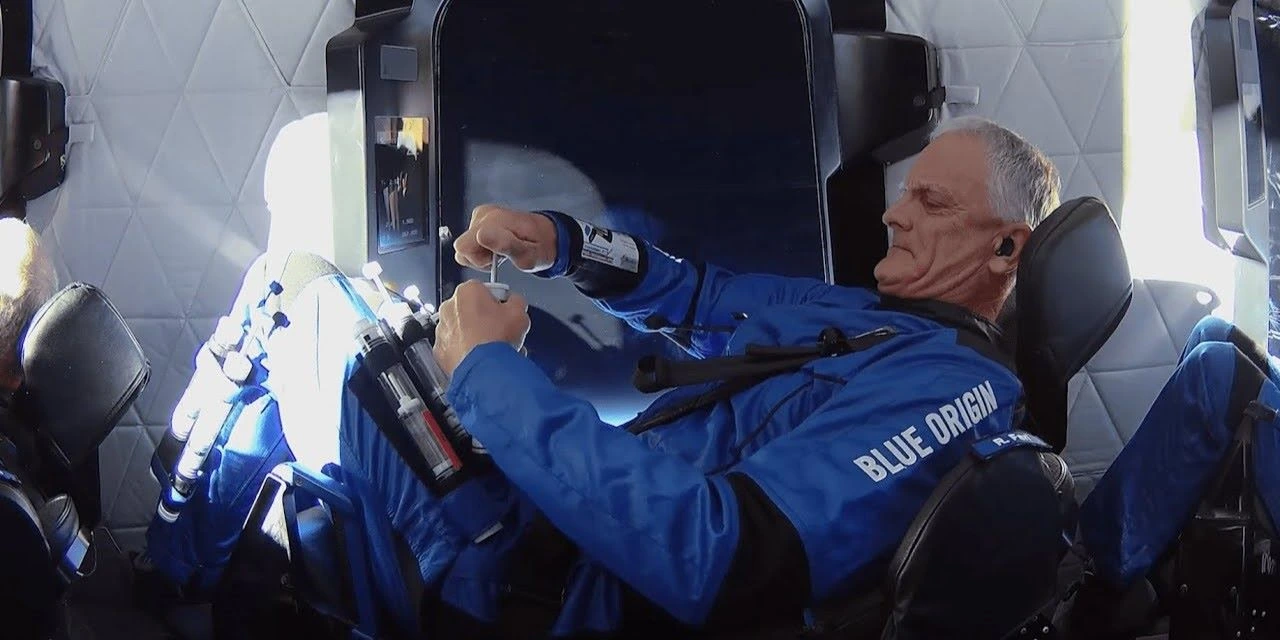
UF researcher Rob Ferl made history as the first NASA-funded university scientist to conduct his own experiment in space, testing how plants respond to microgravity aboard Blue Origin’s New Shepard rocket.

Discover our latest breakthroughs

post featured image

New research reveals repeated flooding is altering a key Florida natural resource

Heavy rains causing repeated river flood intrusions into Florida’s freshwater springs are changing the function of the clear natural resource. Recently published findings from University of Florida Institute of Food and Agricultural Sciences (UF/IFAS) researchers reveal that these intrusions can cause flow reversal worsening already present problems.

post featured image

Mars rover detects never-before-seen organic compounds in new experiment

NASA’s Curiosity Mars rover uncovered a diverse mix of organic molecules on Mars, including chemicals widely considered building blocks for the origin of life on Earth. The findings, which come from a chemical experiment performed for the first time on another world, reveal that the Martian surface can preserve the kinds of molecules that could serve as signs of ancient life.

post featured image

UF prepares next generation of planners for Florida’s growth challenges

At UF’s Department of Urban and Regional Planning, the next generation of planners and community leaders is learning to address these challenges, from smart growth and cultural preservation to supporting aging populations and advancing ecological conservation. Faculty are at the forefront of research in affordable housing, transportation planning and conservation across the state.

post featured image

As AI energy demand soars, UF scientist seeks solutions in space

The breathless growth of artificial intelligence is straining energy grids. Some technology experts even forecast an “AI Winter” if energy demands exceed supply. As scientists scramble to find ways to power the AI revolution, one engineering researcher from the University of Florida is among the those looking up for a viable solution. Way up.

post featured image

‘PrincipalGPT’ creates a new AI blueprint for legal literacy in the classroom

A new AI-based model for K-12 learning is taking shape at the University of Florida. Chris Thomas, J.D., Ph.D., has found a way to deepen his students’ legal comprehension by replacing a short essay assignment with a dynamic, interactive role-playing exchange using ChatGPT. The new assignment, called PrincipalGPT, allows students to simulate real-world practice via legal conversations that mirror those taking place in schools across the country.