

GLOBAL Alert Overide

Vight condensed lorem ipsum dolor sit amet, consetetur sadipscing elitr, sed diam nonumy eirmod tempor invidunt ut labore et dolore magna aliquyam erat, sed diam voluptua. At vero eos et accusam et justo duo dolores et ea rebum. Stet clita kasd gubergr sea takimata sanctus est Lorem ipsum dolor sit amet. Lorem ipsum dolor sit amet, consedipscing elitr, sed diam nonumy eirmod tempor invidunt ut labore et dolore magna aliquyam erat, sed diam voluptua.

Skip to main content

The Latest

  • The inside of a research lab in Canada

    UF physicists part of effort toward first-ever detection of dark matter(opens in a new tab)

    Despite estimating that dark matter makes up approximately 85% of all the universe’s matter, scientists know very little about the invisible substance. But an experiment based in a lab in Sudbury, Canada, has taken a step toward potentially recording the first detections of dark matter particles. A team including Tarek Saab, Ph.D., professor of physics at the University of Florida, constructed and installed the Super Cryogenic Dark Matter Search, or SuperCDMS, SNOLAB, which started collecting data earlier this month.

  • A close-up shot of citrus fruit on a tree

    EPA approves HLB-resistant citrus rootstock based on UF research(opens in a new tab)

    Florida company Soilcea is preparing to supply more than 300,000 citrus trees based on University of Florida technology after U.S. Environmental Protection Agency approval of CarriCea T1, a new Huanglongbing (HLB)-resistant rootstock that could help growers combat citrus greening.

  • A researcher in a lab

    Pioneers in pain relief: UF-led research team test injectable, battery-free neural implants(opens in a new tab)

    A team led by University of Florida researchers is developing an injectable implant to stimulate nerves without batteries or wires. The research stands to improve treatment for chronic pain and neurological disorders. The implant is injected into the body and powered wirelessly by a small, wearable — and removable — transmitter worn outside the body that transmits energy through the tissue.

  • A shot of UF's Gainesville campus

    UF ranks No. 4 among public universities in TIME magazine’s America’s Best Colleges 2027(opens in a new tab)

    The University of Florida has been ranked No. 4 among public universities in the inaugural TIME magazine “America’s Best Colleges of 2026-2027” ranking, placing UF among the nation’s top institutions for student outcomes, learning environment and attractiveness to students. The new ranking was developed by TIME magazine in partnership with Statista and focuses on the value students receive from their college education, including outcomes after graduation and the overall student experience.

  • Someone holds a monarch butterfly

    Tiny transmitters could unlock monarch migration mysteries in Florida(opens in a new tab)

    Monarch butterfly migration has captivated scientists for generations. They arrive quietly, fluttering through fields and roadsides, stopping at nectar plants to feed and to lay eggs on patches of milkweed. Soon their offspring emerge and begin dispersing across the landscape. What happens next has long remained one of the biggest unanswered questions in monarch migration research. Now, researchers at the University of Florida are preparing to follow the butterflies in a way that was impossible until recently — using tiny solar-powered radio transmitters light enough to ride on the backs of monarch butterflies as they move through North Central Florida.

  • Austin Evans poses for a headshot

    UF chemist Austin Evans receives federal award to advance next-generation materials

    University of Florida chemist Austin Evans, Ph.D., has been selected for a Presidential Early Career Award for Scientists and Engineers (PECASE), which is the highest honor the U.S. government gives to early-career scientists and engineers. The five-year award from the U.S. Department of Defense will support Evans’ research on next-generation polymeric materials with potential applications in electronics, space and other energy implications.

  • A close-up of Blue Origin samples

    University of Florida research spending reaches record $1.34 billion in fiscal year 2026

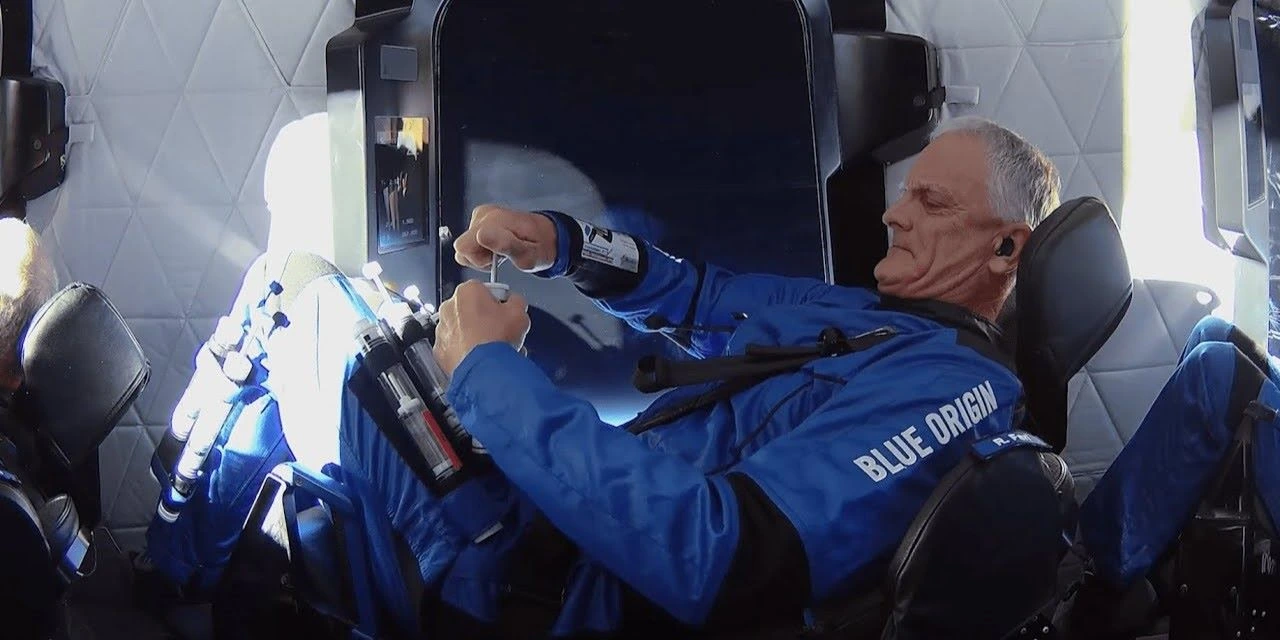
    University of Florida faculty conducted a record $1.34 billion in research in fiscal year 2026, advancing discoveries in medicine, agriculture, engineering, space and many other fields. The research spending figures are estimates based on UF’s response to the National Science Foundation’s annual Higher Education Research and Development, or HERD, Survey, the national standard for comparing university research activity, which will be finalized early next year. They reflect spending during the fiscal year that ended June 30.

From Florida Newsletter

Stay Connected to What’s Happening at UF

Discover the research, innovation and people making news at the University of Florida. Our monthly newsletter brings the stories worth knowing straight to your inbox.

Artificial Intelligence Investment

Setting UF Apart

Play Video