
Always Forward
AI at UF
At the University of Florida, artificial intelligence is more than a tool—it’s a catalyst for discovery. Across disciplines, UF researchers are harnessing AI to solve real-world challenges, from advancing precision in agriculture to revolutionizing space exploration. Explore how UF is integrating AI into research that delivers lasting global impact.
The Latest
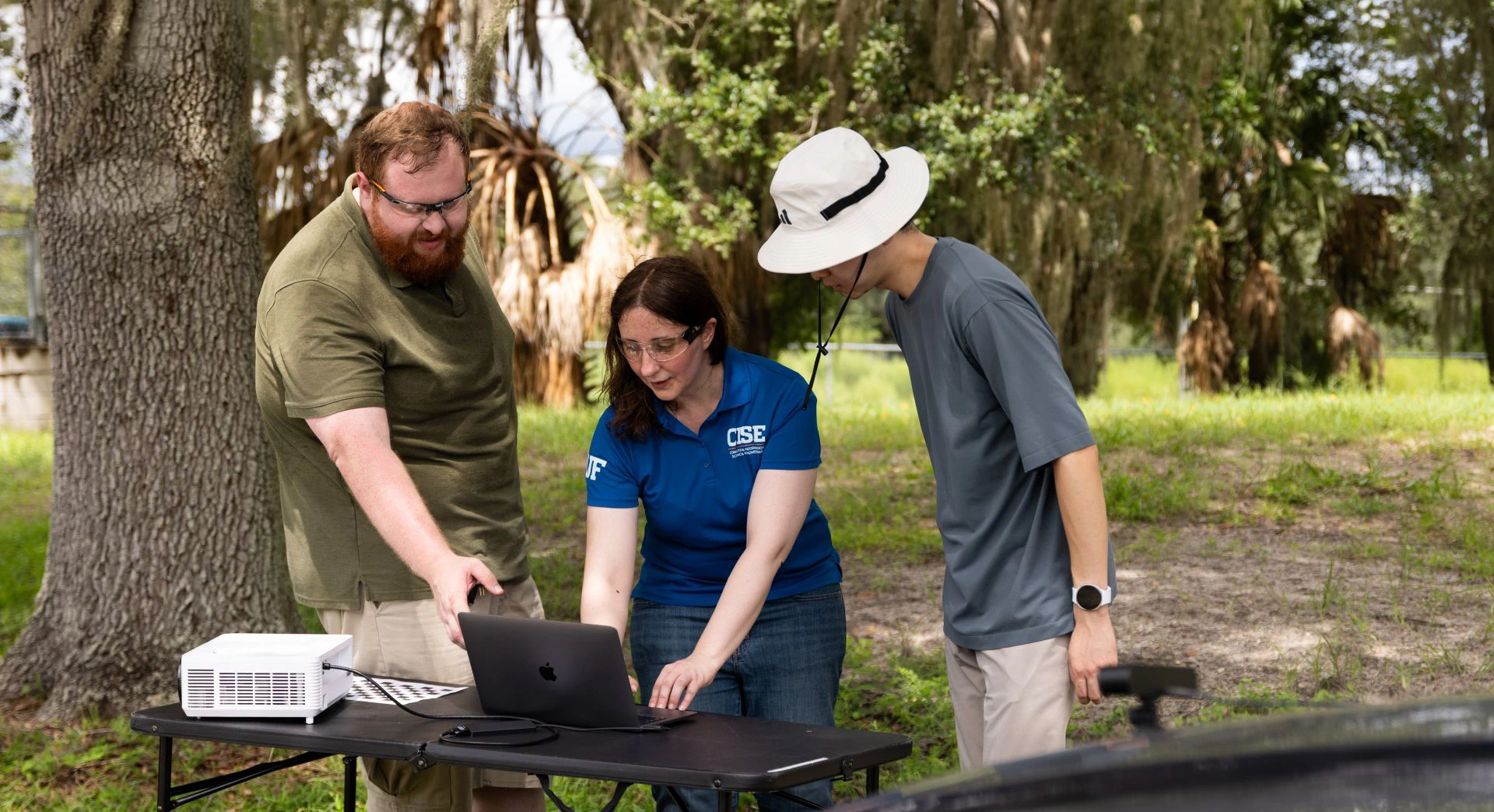
Simple visual patterns can trick AI-powered vehicles and robots, UF research finds
A simple pattern of black-and-white stripes could cause an autonomous vehicle or robot to misjudge how far away an obstacle is, potentially triggering an unexpected maneuver or even a collision, according to new University of Florida research. The finding exposes a previously overlooked vulnerability in the technology that autonomous systems use to perceive depth — a critical capability for vehicles, drones and robots navigating their surroundings.

Leap and learn: AI‑PLAY to turn movement into AI lessons
What if elementary school students could learn the fundamentals of artificial intelligence and large language models just by moving their bodies? As artificial intelligence is increasingly shaping how people learn, work, communicate and make decisions, University of Florida researchers are asking how best to help young learners develop a foundational understanding of how AI works and how it affects society.

Young adults who use generative artificial intelligence to ask health-related questions are more likely to screen positive for clinically significant anxiety and depression than those not using the AI tool for health issues, according to a new study led by University of Florida researcher Yusen Zhai.

For people with drug-resistant epilepsy, surgery can offer a life-changing opportunity to control seizures. But it can also come with questions about how a procedure could affect language, memory and communication. A new $2.32 million NIH-funded project led by the University of Florida aims to give patients, families and clinicians more personalized information to help answer those questions before surgery takes place.

From education to innovation: How UF is preparing students to thrive with AI(opens in a new tab)
Since launching its AI Across the Curriculum initiative in 2020, UF made AI literacy part of the university experience for students across all disciplines, not only those pursuing degrees in computer science or similar technical fields. Today, UF offers more than 200 AI-related courses across all 16 of its colleges and a university-wide AI Fundamentals and Applications certificate open to undergraduate students of every major.

AI with attitude? Examining how AI performs in high-risk situations(opens in a new tab)
Large language models, the technology at the heart of chat-based AI platforms like ChatGPT, have many human-like traits ascribed to them. In common parlance, these models are described as intelligent or as having intentions, biases, desires or even beliefs. But do they have attitudes? University of Florida Engineering Professor Eric Jing Du, Ph.D., is trying to find out.